









Pipeline Steel Plate – API 5L Steel Plate
Product Overview
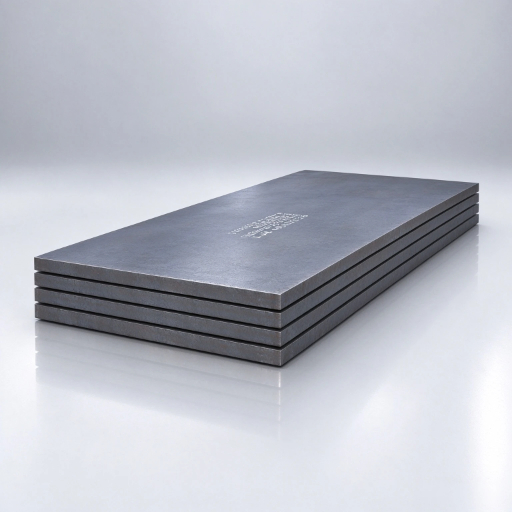
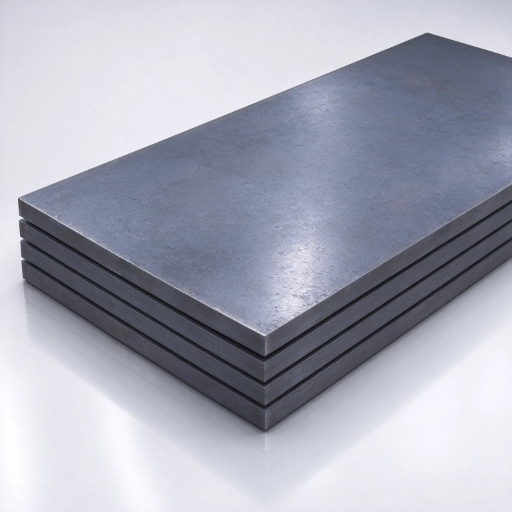
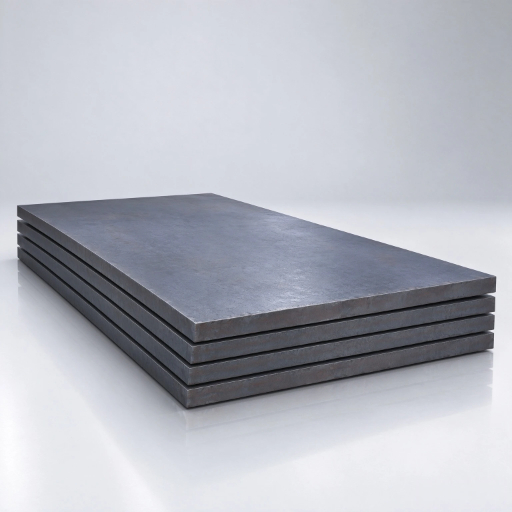
Pipeline steel plate is manufactured to API 5L and used by pipe mills to produce longitudinal submerged arc welded and spiral welded line pipe for long-distance oil and gas transmission. Jingye supplies L245 or X42 through L485 or X70, with optional resistance to hydrogen-induced cracking and sulphide stress corrosion cracking, and drop weight tear test performance.
The plates feature low carbon equivalent for high-quality welding, controlled toughness, and consistent through-thickness quality for the high forming strains involved in pipe making.
Grades and Standards
| Grade | Standard | Notes |
| L245 / Gr.B | API 5L, GB/T 9711 | Entry level line pipe grade |
| L290 / X42 | API 5L, GB/T 9711 | |
| L320 / X46 | API 5L, GB/T 9711 | |
| L360 / X52 | API 5L, GB/T 9711 | Most widely specified grade for onshore lines |
| L390 / X56 | API 5L, GB/T 9711 | |
| L415 / X60 | API 5L, GB/T 9711 | Widely used for gas transmission |
| L450 / X65 | API 5L, GB/T 9711 | High-pressure gas transmission mains |
| L485 / X70 | API 5L, GB/T 9711 | Long-distance high-pressure trunk lines |
| L485 / X80 | API 5L, GB/T 9711 | Highest strength grade in our range |
X designations refer to minimum yield strength in thousands of pounds per square inch: X65 is about 450 MPa and X70 about 485 MPa. The L designation is the metric name for the same grade, so L450 and X65 are the same steel. Plates can be supplied to PSL 1 or PSL 2 requirements.
Available Dimensions
Thickness 10 to 32 mm; width up to 4600 mm; length up to 18000 mm. Thickness of 10 to 20 mm is available where drop weight tear test performance is guaranteed.
Key Features
- Low carbon equivalent for reliable high-speed longitudinal and submerged arc welding.
- Hydrogen-induced cracking and sulphide stress corrosion cracking options for sour service.
- Drop weight tear test performance for low-temperature and high-pressure lines.
- Consistent cleanliness and through-thickness quality for pipe forming.
- Compliant with API 5L and GB/T 9711 for international pipeline projects.
Applications
- Long-distance oil and gas transmission pipelines.
- Sour service and offshore pipeline systems.
- City gas networks and station piping.
Delivery, Testing and Quality
Plates are rolled on 3000 mm and 3800 mm mills with a combined annual capacity of 6 million tonnes. Delivery conditions include as-rolled (AR), controlled rolling (CR), normalising (N), normalising rolling (NR), thermo-mechanical controlled processing (TMCP) and quenching and tempering (Q+T). Ultrasonic testing is available to GB/T 2970 (classes I to III), EN 10160 and ASTM A578, and through-thickness properties to Z15, Z25 and Z35 can be specified to GB/T 5313 and EN 10164. Hull structural plates are approved by CCS, ABS, BV, DNV, LR, NK, KR, RINA and RS.
Where existing technical agreements are applied no evaluation is required; requirements beyond them, including guaranteed hydrogen-induced cracking resistance, sulphide stress corrosion cracking resistance, thickness of 20 mm and above, or drop weight tear test performance, are subject to evaluation.

Frequently Asked Questions
- What does API 5L X65 mean?
API 5L is the specification for line pipe, and X65 indicates a minimum yield strength of 65 000 psi, approximately 450 MPa.
- Do you supply the pipe or the plate?
Jingye supplies the pipeline steel plate. Pipe mills roll it into longitudinal submerged arc welded, spiral welded or electric resistance welded line pipe.
- What is the difference between PSL 1 and PSL 2?
PSL 2 is the higher specification level: it adds mandatory impact testing, tighter chemistry limits and additional requirements compared with PSL 1.