
















Product Overview
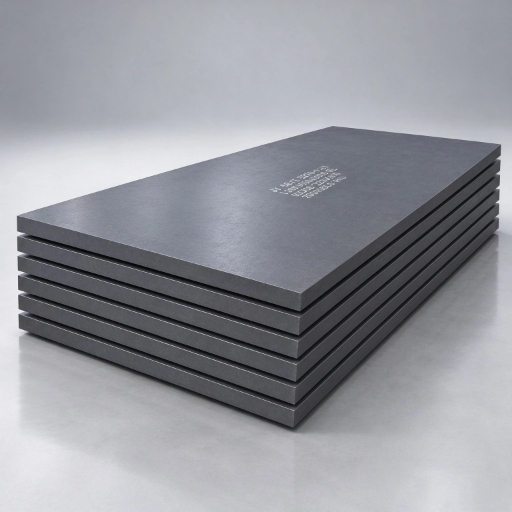
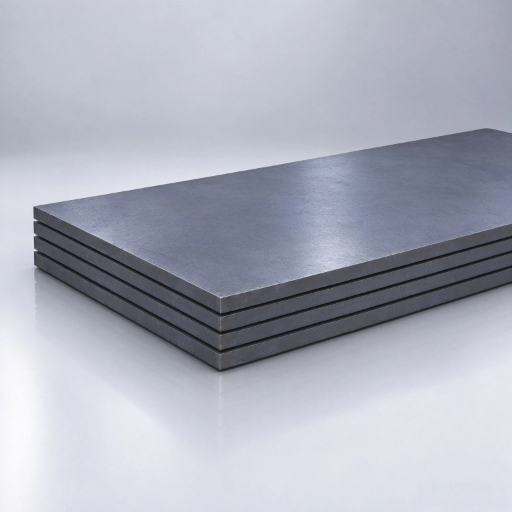
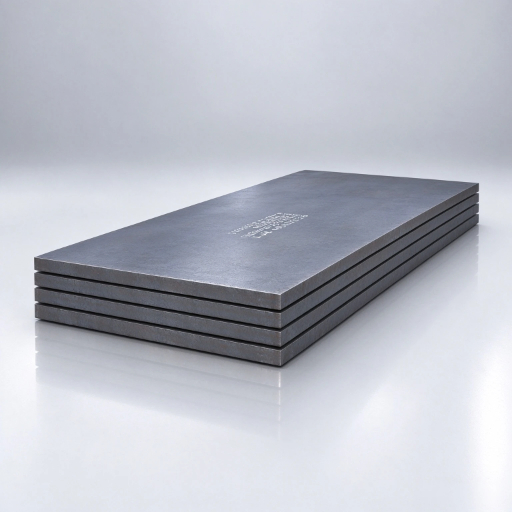
Shipbuilding steel plate, also called marine grade plate or hull structural steel, is produced to the rules of international classification societies for ship hulls, offshore platforms and submarine pipelines. Jingye supplies normal-strength grades A, B, D and E, together with high-strength grades AH32 to AH40, DH32 to DH40 and EH32 to EH40.
In these designations the letter indicates the Charpy V-notch impact test temperature: A at 0 degrees Celsius, D at minus 20 degrees Celsius, E at minus 40 degrees Celsius and F at minus 60 degrees Celsius. For high-strength grades the number indicates minimum yield strength: 32 for 315 MPa, 36 for 355 MPa and 40 for 390 MPa. Normal-strength grades A to E have a minimum yield strength of 235 MPa.
Grades and Standards
| Grade | Minimum Yield Strength | Notes |
| A / B / D / E | 235 MPa | Normal strength hull structural steel to class rules |
| AH32 / DH32 / EH32 | 315 MPa | Impact tested at 0, minus 20 and minus 40 degrees Celsius |
| AH36 / DH36 / EH36 | 355 MPa | Most widely specified high-strength grades |
| AH40 / DH40 / EH40 | 390 MPa | Highest strength class |
| Z-direction grades such as A-Z25, D-Z25 | 235 MPa | Through-thickness tested where specified |
Grades are certified to the rules of CCS, ABS, BV, DNV, LR, NK, KR, RINA and RS, and the same heat can be ordered against different flag requirements.
Available Dimensions
Thickness 6 to 60 mm; width up to 4600 mm; length up to 18000 mm. Through-thickness grades Z15, Z25 and Z35 are available to GB/T 5313 and EN 10164. Plates are delivered as-rolled, normalised, controlled rolled or thermo-mechanically controlled processed, with mill scale intact or shot blasted and primed on request.
Key Features
- Approved by nine classification societies, so one heat can serve different flag requirements.
- Carbon equivalent held at 0.40 or below for ready weldability and low cracking risk.
- Niobium and titanium micro-alloying maintains strength while keeping carbon equivalent low.
- Each plate is stamped with the grade, heat number and class stamp.
- Class-endorsed mill test certificate supplied with every shipment.
Applications
- Ship hulls, decks, bulkheads and superstructures.
- Offshore platforms and jacket structures.
- Subsea and submarine pipelines.
Delivery, Testing and Quality
Plates are rolled on 3000 mm and 3800 mm mills with a combined annual capacity of 6 million tonnes. Delivery conditions include as-rolled (AR), controlled rolling (CR), normalising (N), normalising rolling (NR), thermo-mechanical controlled processing (TMCP) and quenching and tempering (Q+T). Ultrasonic testing is available to GB/T 2970 (classes I to III), EN 10160 and ASTM A578, and through-thickness properties to Z15, Z25 and Z35 can be specified to GB/T 5313 and EN 10164. Hull structural plates are approved by CCS, ABS, BV, DNV, LR, NK, KR, RINA and RS.

Frequently Asked Questions
- What does AH36 mean?
A indicates a Charpy V-notch impact test temperature of 0 degrees Celsius, H denotes high strength, and 36 indicates a minimum yield strength of 355 MPa.
- What is the difference between AH36 and DH36?
Both are in the same 355 MPa strength class and differ in impact test temperature. AH36 is tested at 0 degrees Celsius, while DH36 is tested at minus 20 degrees Celsius for colder service.
- Do you supply class-approved mill certificates?
Yes. Plates are released with a mill test certificate plus the relevant classification society certificate or stamp.
- Why is Z-direction performance needed?
Through-thickness properties reduce the risk of lamellar tearing in heavily restrained welded joints, such as node connections in offshore structures.