
















Product Overview
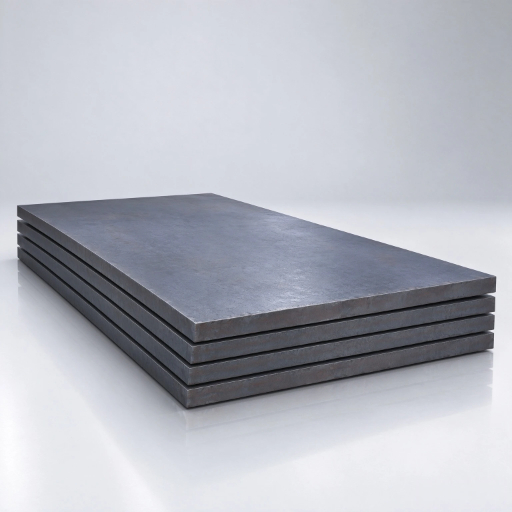
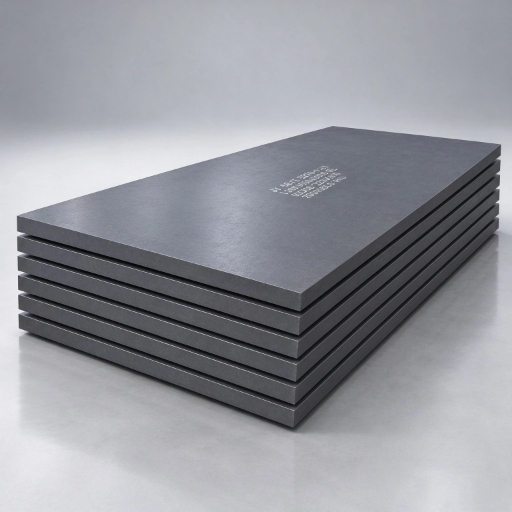
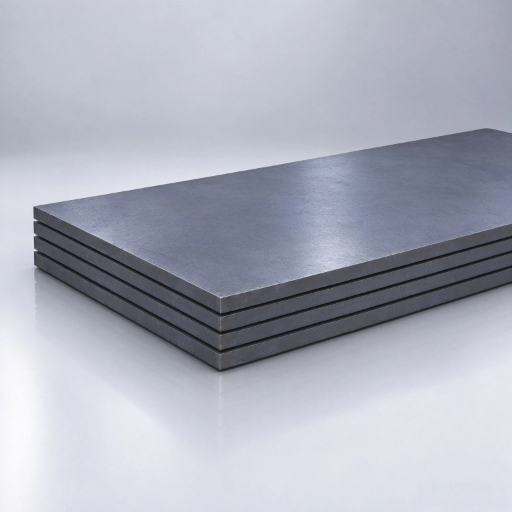
Boiler and pressure vessel steel plate is a specialty plate for boilers, reactors and storage tanks that must contain pressure, withstand elevated temperature and often resist hydrogen-induced cracking. Jingye supplies Q245R, Q345R, Q370R, 16MnDR, 09MnNiDR, 15CrMoR and 14Cr1MoR to GB/T 713 and GB/T 3531, A516 and A515 to ASME and ASTM, A387 chromium-molybdenum grades, A537, A285 and P235GH to P460 to EN 10028.
Plates are produced with controlled chemistry and heat treatment, and can be supplied with simulated post-weld heat treatment, ultrasonic testing, and hydrogen-induced cracking and sulphide stress corrosion cracking resistance for sour service.
Grades and Standards
| Grade | Standard | Notes |
| Q245R / Q345R | GB/T 713 | Main Chinese vessel grades, Z-direction available |
| Q370R | GB/T 713 | Higher strength vessel grade |
| 16MnDR / 09MnNiDR | GB/T 3531 | Low-temperature vessel grades |
| 15CrMoR / 14Cr1MoR | GB/T 713 | Chromium-molybdenum heat resistant grades |
| A516 Gr.60 / 65 / 70 | ASTM A516, ASME SA-516 | US and ASME intermediate and low temperature vessel grades |
| A515 Gr.60 / 65 / 70 | ASTM A515, ASME SA-515 | US intermediate temperature vessel grades |
| A387 Gr.11 / 12 / 22 | ASTM A387, ASME SA-387 | Chromium-molybdenum vessel grades |
| A285 Gr.A / B / C, A537 CL1 / CL2 | ASTM A285, ASTM A537 | Low and intermediate strength vessel grades |
| P235GH, P265GH, P355GH, 16Mo3 | EN 10028-2 | European pressure vessel grades |
| P275, P355, P460 series | EN 10028-3, EN 10028-6 | Normalised and quenched grades |
Available Dimensions
Thickness 8 to 60 mm for most grades, with some carbon and low-alloy vessel grades available up to 200 mm; width up to 4600 mm; length up to 18000 mm. Delivery conditions include as-rolled, normalised, normalised and tempered, thermo-mechanically controlled processed and quenched and tempered.
Key Features
- Controlled chemistry and heat treatment for pressure safety and elevated-temperature strength.
- Hydrogen-induced cracking and sulphide stress corrosion cracking resistance available for sour service.
- Simulated post-weld heat treatment and ultrasonic testing to project specification.
- Z-direction properties for heavy nozzle and shell connections.
- Thicknesses above 50 mm are subject to technical review.
Applications
- Power station boilers and industrial boilers.
- Pressure vessels, reactors, heat exchangers and separators.
- LPG, ammonia and general storage tanks.
Delivery, Testing and Quality
Plates are rolled on 3000 mm and 3800 mm mills with a combined annual capacity of 6 million tonnes. Delivery conditions include as-rolled (AR), controlled rolling (CR), normalising (N), normalising rolling (NR), thermo-mechanical controlled processing (TMCP) and quenching and tempering (Q+T). Ultrasonic testing is available to GB/T 2970 (classes I to III), EN 10160 and ASTM A578, and through-thickness properties to Z15, Z25 and Z35 can be specified to GB/T 5313 and EN 10164. Hull structural plates are approved by CCS, ABS, BV, DNV, LR, NK, KR, RINA and RS.
Export plates destined for the European Union require PED certification before order acceptance, and such enquiries are subject to evaluation.

Frequently Asked Questions
- What is pressure vessel steel?
A steel qualified to codes such as GB/T 713 or ASME for containing pressure. It must guarantee toughness, and for sour service it usually also requires resistance to hydrogen-induced cracking.
- Can you supply HIC resistant plate?
Yes. Q345R and A516 can be supplied with hydrogen-induced cracking and sulphide stress corrosion cracking requirements, subject to technical review.
- What does the R in Q345R indicate?
The letter R denotes pressure vessel application in the Chinese grade system. Q345R broadly corresponds to the Q355 structural grade and specifies a minimum yield strength of 345 MPa for thin plate.