
















Product Overview
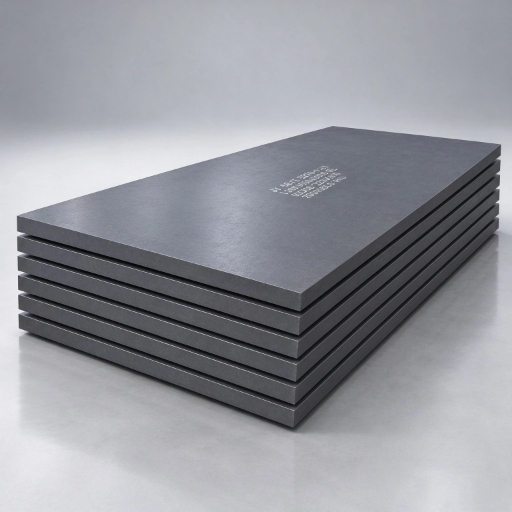
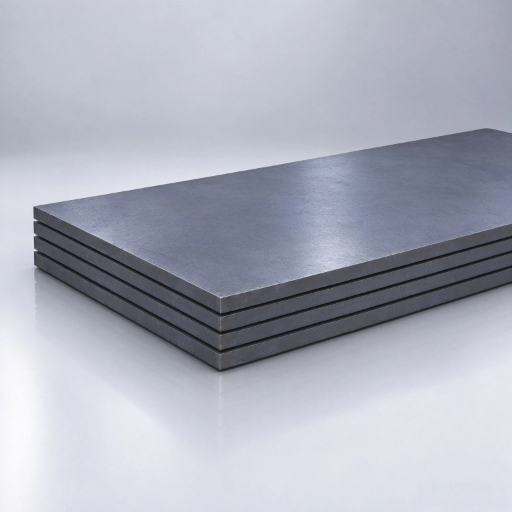
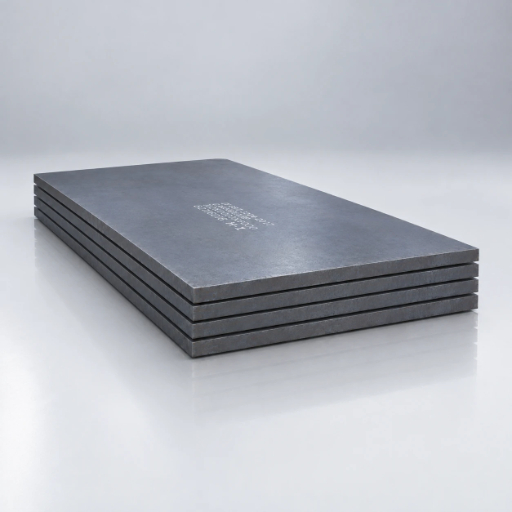
High strength low alloy steel plate, commonly abbreviated HSLA plate, delivers higher strength at lower weight through micro-alloying with niobium, titanium and vanadium. Jingye supplies Q355, Q390, Q420, Q460 and Q355N series to GB/T 1591, S355 and S460 series to EN 10025, A572 Gr.42/50/60/65 to ASTM and SM490 to JIS G3106.
HSLA plates enable lighter and stronger structures, and are widely used where weight saving and load capacity both matter, such as long-span bridges, high-rise buildings, cranes and wind turbine towers.
Grades and Standards
| Grade | Standard | Notes |
| Q355B/C/D, Q355NB/C/D | GB/T 1591 | Main Chinese HSLA grades |
| Q390 / Q420 / Q460 | GB/T 1591 | Progressive strength levels |
| S355JR / J0 / J2 / K2 | EN 10025-2 | European standard |
| S355N / S355NL / S355M / S355ML | EN 10025-3, EN 10025-4 | Normalised and TMCP grades |
| S460M / S460N | EN 10025-4, EN 10025-3 | High-strength grades |
| A572 Gr.42 / 50 / 60 / 65 | ASTM A572/A572M | US HSLA grades |
| SM490A / SM490B / SM490YA | JIS G3106 | Japanese welded structure grades |
Available Dimensions
Thickness 6 to 200 mm; width 1500 to 4600 mm; length 6000 to 22000 mm. Delivery conditions include as-rolled, controlled rolling, normalising, normalising rolling and thermo-mechanical controlled processing.
Key Features
- Higher yield strength than carbon plate at the same thickness, allowing lighter sections.
- Niobium and titanium micro-alloying provides good toughness at low carbon equivalent.
- Low-temperature impact properties down to minus 40 degrees Celsius for E grades.
- Z-direction properties Z15, Z25 and Z35 available for restrained welded joints.
- Weldable with conventional processes under standard procedures.
Applications
- Long-span bridges and high-rise buildings.
- Cranes, lifting equipment and wind turbine towers.
- Heavy machinery, mining equipment and transport structures.
Delivery, Testing and Quality
Plates are rolled on 3000 mm and 3800 mm mills with a combined annual capacity of 6 million tonnes. Delivery conditions include as-rolled (AR), controlled rolling (CR), normalising (N), normalising rolling (NR), thermo-mechanical controlled processing (TMCP) and quenching and tempering (Q+T). Ultrasonic testing is available to GB/T 2970 (classes I to III), EN 10160 and ASTM A578, and through-thickness properties to Z15, Z25 and Z35 can be specified to GB/T 5313 and EN 10164. Hull structural plates are approved by CCS, ABS, BV, DNV, LR, NK, KR, RINA and RS.

Frequently Asked Questions
- What does HSLA stand for?
High Strength Low Alloy. It is a low-alloy steel with higher strength and good toughness and weldability compared with plain carbon steel.
- Is HSLA the same as high tensile steel?
The terms are often used interchangeably in trade. HSLA is the technical description, while high tensile steel is the common commercial phrase.
- How does Q355 compare with S355?
Q355 is the Chinese designation defined in GB/T 1591 and S355 is the European designation in EN 10025-2. Both specify a minimum yield strength of 355 MPa and are treated as equivalents.